

Per oltre un secolo, nella mia famiglia si è tramandata la storia di un uomo partito per l’America e morto, si diceva, “per un mal di denti”.
Nessuno sapeva dove fosse stato sepolto. Nessuno sapeva cosa gli fosse realmente accaduto.
Questa è la storia di come documenti italiani e americani, letti insieme, hanno restituito un volto e una storia a quell’uomo.
Ecco la sua storia, ricostruita atto dopo atto.
Pasquale Cianciulli nasce a Montella, in provincia di Avellino, il 9 aprile 1876, figlio di Giuseppe Cianciulli, contadino, ed Eustachia Teresa Di Genua, contadina, entrambi poco più che ventenni. È il terzo di sette figli: Donato Antonio (1871), Ferdinando Ciro (1874), Pasquale (1876), Salvatore (1879), Antonio (1882), Michele (1883) e Antonia (1886).
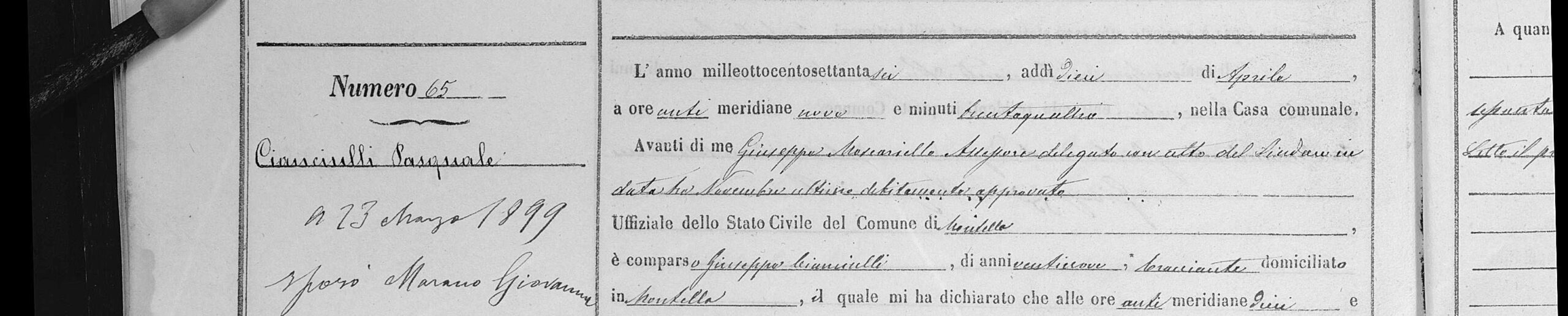
Il 3 marzo 1899, a ventidue anni, sposa Giovanna Mariantonia Marano, ventunenne, anche lei di Montella. Entrambi vivono nel casale di Sorbo.
Nello stesso anno nasce il primogenito, Salvatore Giuseppe.
Nella primavera del 1901 Pasquale parte da Napoli a bordo del piroscafo Lombardia per raggiungere negli Stati Uniti il fratello maggiore Donato Antonio, già emigrato.
Il 18 giugno 1901, mentre Pasquale è in viaggio, nasce la secondogenita Eustacchia Giuseppa. L’atto di nascita viene registrato il 22 giugno dalla levatrice, poiché il padre è già partito.
Cinque giorni dopo, il 27 giugno 1901, Pasquale sbarca a Ellis Island. Ha venticinque anni, è sposato e dichiara come ultima residenza Montella.
Non tornerà mai più. E non conoscerà mai sua figlia.


Rochester, 24 marzo 1902
A Rochester, nello Stato di New York, Pasquale muore il 24 marzo 1902.
Ha soltanto venticinque anni.
La causa del decesso è una setticemia provocata da un trauma alla mascella inferiore. Negli anni precedenti alla scoperta degli antibiotici, un’infezione che oggi verrebbe curata in pochi giorni poteva trasformarsi in una condanna a morte.
È proprio quel trauma alla mascella che, dopo oltre un secolo di racconti familiari, sarebbe sopravvissuto nella memoria collettiva come un semplice “mal di denti”.

Numero del gruppo di immagini: 104132595
Un uomo con tre cognomi
Nell’indice dei decessi dello Stato di New York del 1902 il suo cognome compare come Cianguillo.
Nel certificato ufficiale di morte diventa invece Ciangiullo.
Negli atti italiani è naturalmente Cianciulli.
Tre grafie diverse per la stessa persona.
Il certificato conservato dal Monroe County Office of Vital Records restituisce il ritratto di un uomo di cui, a Rochester, quasi nessuno sapeva nulla.
La professione è indicata come sconosciuta.
La residenza è sconosciuta.
I nomi dei genitori sono sconosciuti.
Persino lo stato civile risulta “celibe”, non perché non fosse sposato, ma perché chi fornì le informazioni – con ogni probabilità l’ospedale – semplicemente non lo sapeva.
L’unico dato certo è la causa della morte: setticemia da trauma alla mascella inferiore, certificata dal dottor L. L. Riggin.
L’impresa funebre Rosenbach si occupò della sepoltura presso l’Holy Sepulchre Cemetery di Rochester.
Per chi svolge ricerca genealogica, questo è un esempio perfetto di quanto sia importante confrontare più fonti.
Se avessimo letto soltanto il certificato americano, avremmo conosciuto un uomo apparentemente celibe, senza genitori e senza una provenienza certa.
Solo incrociando documenti italiani e americani, indici errati e trascrizioni ufficiali, emerge la persona reale dietro il documento.

Una morte che lo Stato italiano non conosceva
Eppure la sua storia non termina nel 1902.
Per lo Stato italiano Pasquale è ancora vivo.
Il suo foglio matricolare – matricola 2418, classe 1876, Distretto Militare di Avellino – continua infatti a riportarlo semplicemente come “in congedo illimitato”.
Quando nel 1915 l’Italia entra in guerra e richiama alle armi la sua classe, nessuno sa che Pasquale è morto da tredici anni.
Il 5 dicembre 1916 viene dichiarato disertore.
Il 31 dicembre è denunciato al Tribunale Militare di Napoli.
Sulla carta rimane ricercato per quasi dieci anni.
Solo il 5 giugno 1926, ventiquattro anni dopo la sua morte, il Tribunale Militare dichiara estinta l’azione penale per amnistia.
Solo allora, anche per la burocrazia italiana, Pasquale smette di essere un ricercato.


Dove riposa Pasquale
Tutto è iniziato da un racconto di mia nonna, ascoltato tanti anni fa su un gradino di pietra, in una sera d’estate.
Un nonno morto “per un mal di denti”, di cui nessuno sapeva più nulla.
Oggi so che quel racconto, semplificato dal tempo ma non privo di verità, custodiva un frammento di memoria che valeva la pena ritrovare.
Per ricostruire la sua storia sono serviti un cognome trascritto in tre modi diversi, un uomo dichiarato celibe pur essendo sposato, un ruolo militare che continuava a cercarlo molti anni dopo la sua morte e decine di documenti provenienti da archivi italiani e americani.
Nessuna di queste fonti, presa singolarmente, avrebbe restituito la verità.
Solo mettendole a confronto Pasquale è tornato a essere una persona, non soltanto un nome scritto su un elenco.
È questo il metodo che applico in ogni ricerca genealogica: verificare, confrontare e contestualizzare ogni documento, senza dare mai nulla per scontato.
Perché ogni racconto di famiglia può custodire un frammento di verità, e ogni documento può aggiungere un tassello alla storia.
Ogni famiglia ha una storia che aspetta solo di essere ritrovata.
A volte basta un nome.
Un paese.
Una vecchia fotografia.
O un ricordo tramandato per generazioni.
Se anche tu desideri ricostruire la storia della tua famiglia, sarò felice di aiutarti a iniziare questo percorso.
Beautiful Investagative Work!!! Making what was otherwide was an unknown in America on paper into a real come alive Italy to America Mystery Solved and now never forgotten.